
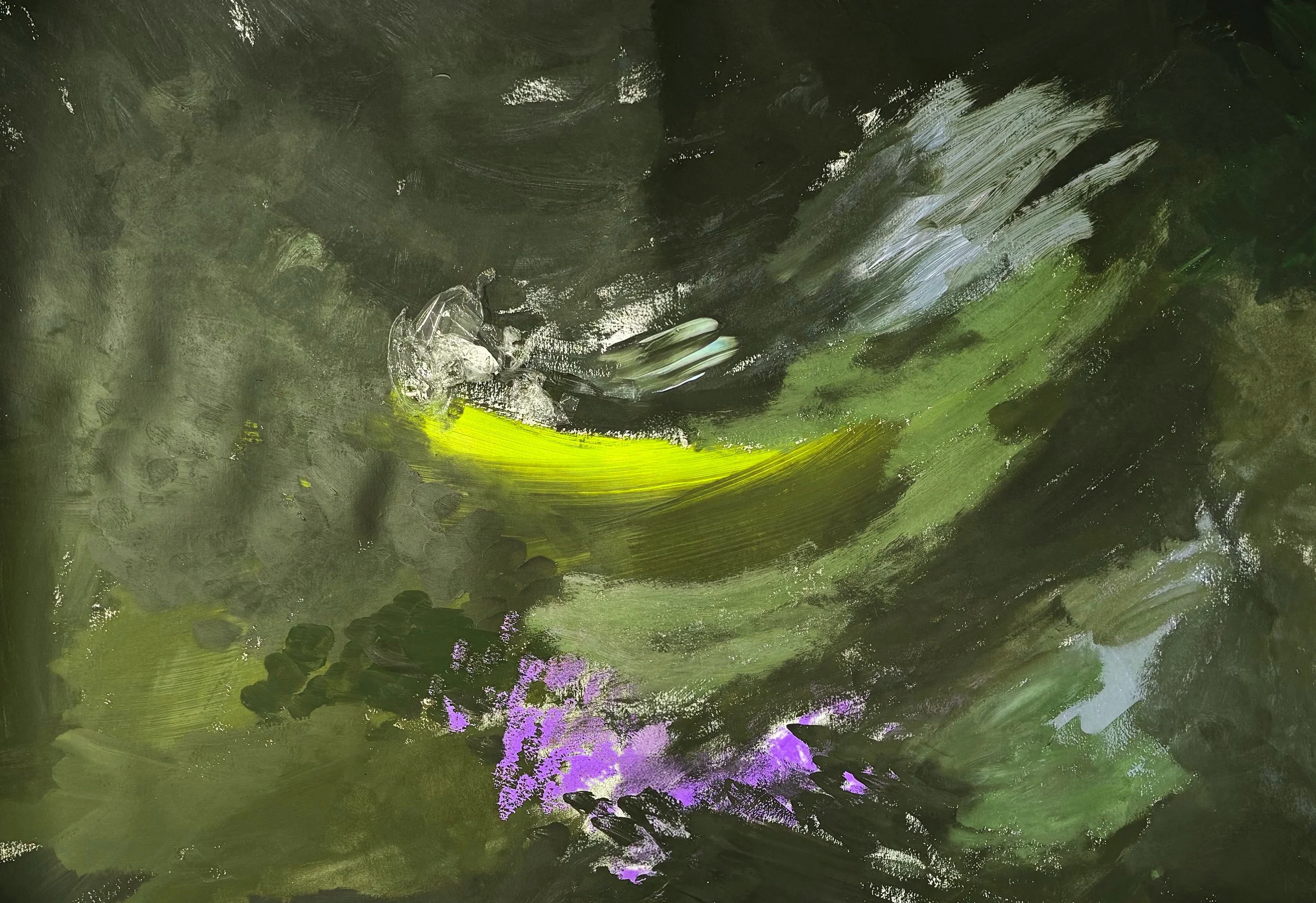
The Between Spaces — A therapeutic space for support through art
Art becomes a bridge
between the inner and outer world, between feeling
and form, between self and connection.
The Between Spaces is dedicated to emotional exploration through art,
grounded in non-directive therapeutic principles.
Rooted in a relational and sensitive approach, it invites children and adults to discover what needs to emerge,
be seen, and transformed, at their own rhythm.
Sessions are offered in Portuguese, Spanish, and English.
Online and in person in Athens.
The relational approach
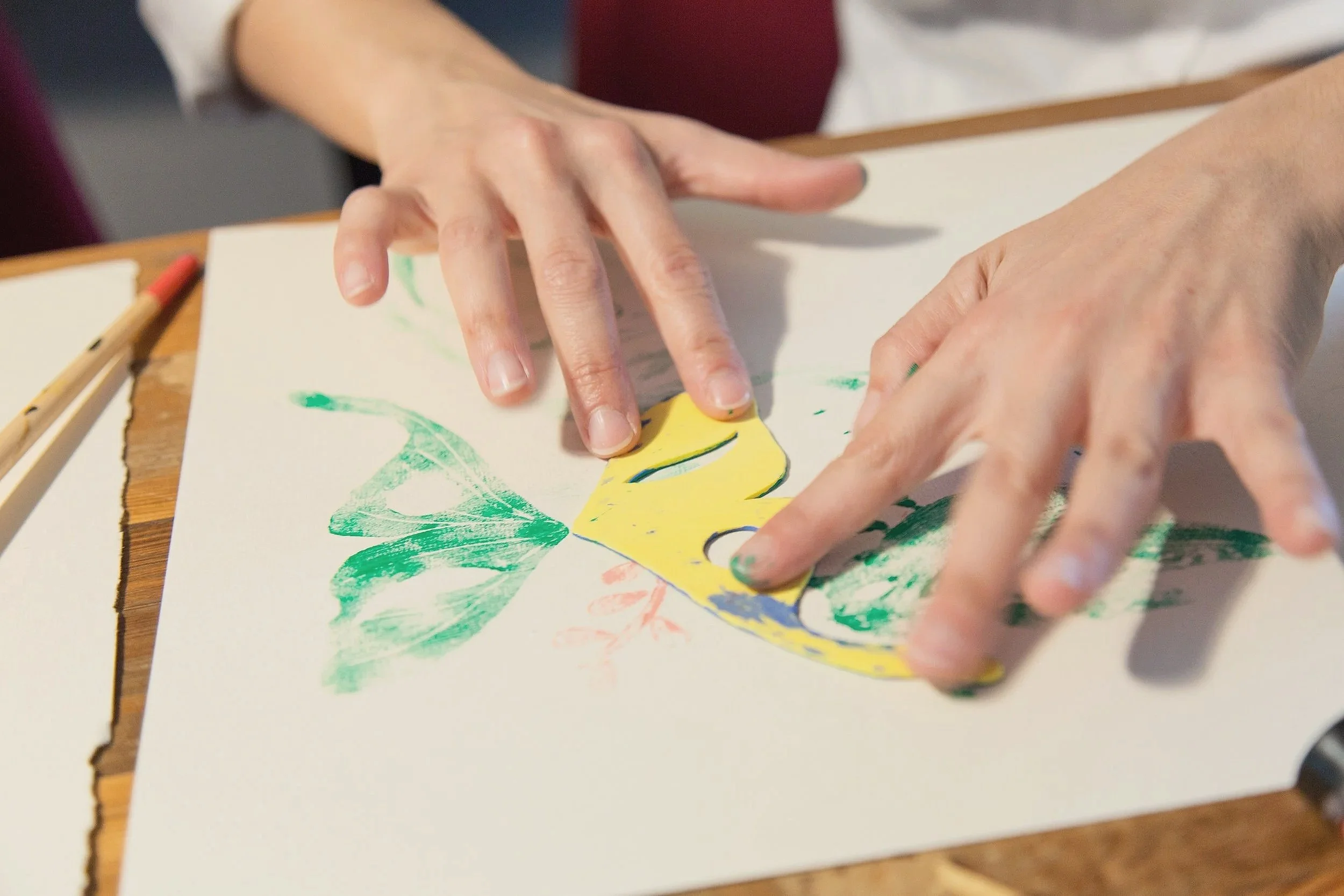
The approach centers on building a trusting, attuned therapeutic relationship, creating a “potential space” where inner experience and external reality can meet. Within this space, mentalization and reflective art-making help participants explore, symbolize, and integrate emotions and experiences without fear of judgment. The process emphasises curiosity about relational dynamics, including transference and countertransference, allowing dialogue and discovery to naturally unfold between therapist and participant.
The structure of a session
Each session typically unfolds in three flexible phases, beginning with an encounter that fosters relational connection between therapist and participant. This is followed by a period of free, non-directed artistic expression, where the focus is on the creative process rather than skill or outcome.
Sessions conclude with optional sharing, allowing participants to reflect on their experience at their own pace, providing a balance of structure, containment, and personal exploration.
The tools in practice
The primary tools are artistic and playful forms of expression, including drawing, painting, collage, clay, and mixed materials. The focus is not on technique, but on the process and on what takes shape through the interaction between inner experience and creative expression.
This process is supported by verbal reflection, attention to non-verbal communication, and the observation of relational dynamics. It is through this combination of image and dialogue that experiences can be gradually approached, understood, and given meaning.
A central element in art therapy is the therapeutic triangle between the artwork, the participant, and the art therapist. The image functions as a third presence in the space, something that can be observed, shared, and reflected upon together. This creates a certain distance that can make it easier to approach complex or difficult emotions.
Within this process, the role of the art therapist is not to interpret or direct, but to accompany, contain, and support the unfolding experience. Through attunement and presence, the art therapist helps hold the space where expression can develop safely, and where what has taken form can be explored and integrated at the participant’s own pace.
Art Therapy: A Space for Expression & Reflection
Individual sessions
for children and adults
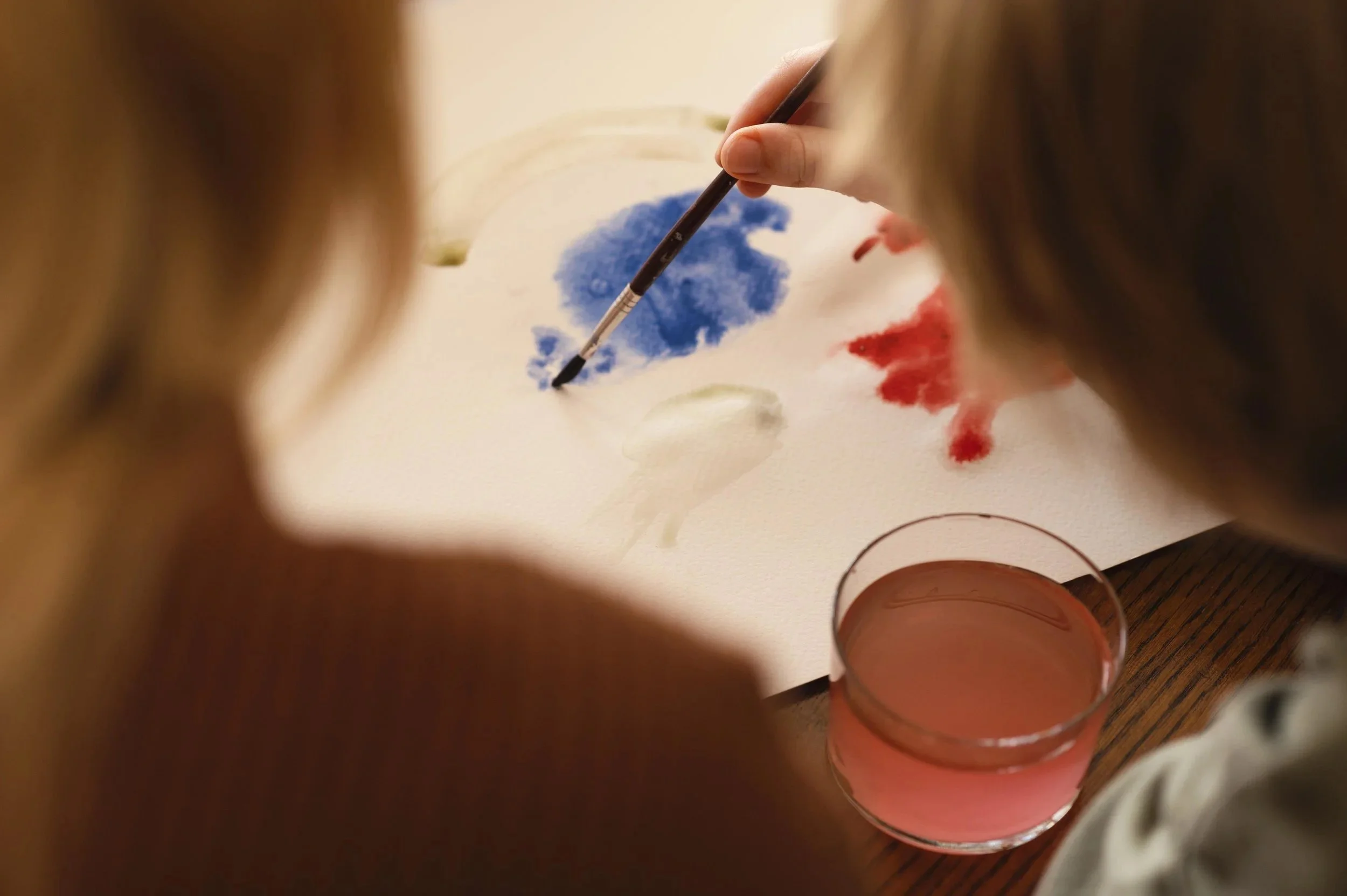
A supportive one-to-one space to explore emotions and experiences through art-making and/or play. This approach is helpful during transitions, grief, anxiety, or relational challenges, fostering emotional awareness, self-regulation, and confidence within a safe, reflective environment.
Focused on process rather than outcome, it encourages self-understanding, relational insight, and creative expression without requiring prior artistic experience.
Coaching for Expression
& Creative Block
Experiential coaching focused on reconnecting with creativity as a pathway to emotional movement and self-discovery.
Designed for individuals who feel creatively or emotionally “stuck,” these space offer guided processes that encourage play, reflection, and renewed connection to inner resources.
Group therapy
for Expats in Athens
Group art therapy for adults living abroad who may be navigating displacement, cultural adaptation, identity shifts, or feelings of in-betweenness.
The group offers a space of shared experience, belonging, and creative reflection, where personal and cultural narratives can be explored safely and symbolically. Shared experiences can be recognised and mirrored, fostering connection and reducing isolation.
Emotional support through
art therapy in schools
Individual or group art therapy sessions within educational settings, supporting emotional expression, relational development, and inclusion.
Programs are tailored to the specific needs of each school, classroom, or community.
Frequently Asked Questions
-
Art Therapy is a form of psychotherapy that uses creative processes, such as drawing, painting, collage, or working with clay, to explore emotions, experiences, and relational patterns.
It is grounded in a relational and psychodynamic approach, meaning that the therapeutic relationship itself is central to the process. Art becomes a bridge between inner experience and shared reflection, especially when words feel limited or difficult.
-
Each session lasts approximately [50/60] minutes and takes place in a safe and confidential space.
A typical session includes time for creative exploration using art materials, followed by reflection. Sometimes the process is more visual and symbolic; sometimes it becomes more verbal. The rhythm depends on the needs of each person.
There is no pressure to produce anything “beautiful” or “correct.” The focus is on experience, not outcome.
-
A variety of materials may be offered, such as:
Drawing materials (pencils, charcoal, pastels)
Paint (watercolor or acrylic)
Collage and mixed media
Clay or three-dimensional materials
The choice of material is part of the therapeutic process and can support different forms of expression.
-
No. No artistic experience or skills are required.
Art Therapy is not about technique or aesthetic quality. It is about using creative processes as a way to explore feelings, thoughts, and relationships.
-
The duration of therapy depends on individual needs and goals. Some people come for short-term support around a specific transition or difficulty, while others engage in longer-term therapeutic work.
This is something we discuss together during the first sessions.
-
Yes. Children often communicate naturally through image and play. Art Therapy provides a developmentally appropriate way for them to express emotions, process experiences, and strengthen emotional regulation and relational skills.
-
Yes. Confidentiality is a fundamental part of the therapeutic process.
For children, parents are supported through periodic meetings while respecting the child’s need for a protected therapeutic space.
-
Yes. Online sessions are available and adapted to the digital setting. Materials are adjusted to what is accessible at home, while maintaining focus on presence, connection, and creative exploration.
Get in contact
for more information
To inquire about sessions or workshops, please use the form below.
All inquiries are responded to within 48 hours.